
 ES
 RU
 TR
 FA
 AR
 ZH
Blog
Blog description

The Compliance Challenges Facing Fintech and Payment Processing Companies
Fintech and payment processing compliance can involve money transmitter licensing, anti-money laundering controls, sanctions compliance, bank partnerships, pricing transparency, and customer data protection. The requirements depend on the company’s activities, payment flows, customers, jurisdictions, and regulatory status.
For fintech founders, payment processor executives, and compliance professionals, the starting point is understanding how the business operates. A company’s regulatory obligations can change when it introduces a wallet, accepts a new merchant category, changes settlement arrangements, or expands internationally.
The following issues deserve particular attention when building or reviewing a U.S. fintech compliance program.
See our AML & Financial Compliance services.
Money Transmitter Licensing and FinCEN Registration
Whether a payment processor qualifies as a money transmitter depends on its activities and the complete flow of funds.
Under Financial Crimes Enforcement Network (FinCEN) rules, certain payment processing activities may qualify for an exemption from the federal definition of money transmitter. The exemption involves specified conditions, including:
Facilitating purchases or bill payments for goods or services other than money transmission itself.
Operating through clearance and settlement systems that admit only financial institutions regulated under the Bank Secrecy Act.
Providing services under a formal agreement with at least the seller or creditor receiving the funds.
Merchant payouts matter as much as the initial collection of payments. In administrative ruling FIN-2014-R009, FinCEN could not reach a definitive conclusion about exemption eligibility because information about the processor’s merchant disbursements was missing.

Businesses should reassess this analysis when they change
- who receives funds,
- who controls them, or
- how payments reach their destination.
AML Compliance, KYC, and Merchant Due Diligence
Anti-money laundering requirements depend on the company’s regulatory status. Customer and merchant controls should reflect the requirements that apply to its business.
Under 31 C.F.R. § 1022.210, money services businesses must maintain an effective written anti-money laundering (AML) program proportionate to their risks. Required components include
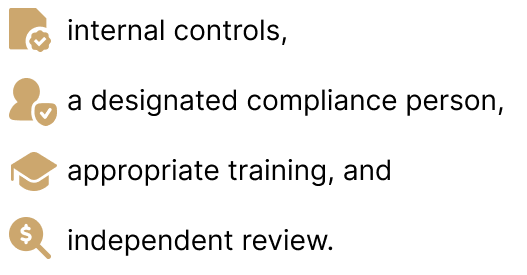
Covered money transmitters also have suspicious activity reporting obligations. Under 31 C.F.R. § 1022.320, reports generally must be filed within 30 calendar days after initial detection of facts that may constitute a basis for filing.
Know-your-customer (KYC) practices and merchant due diligence help businesses understand whom they serve. Specific mandatory identification requirements depend on the applicable rules and business model.
For payment processors, a useful review compares the merchant’s stated activities with its
- website,
- transaction patterns, and
- settlement beneficiaries.
Treasury’s 2026 National Money Laundering Risk Assessment identifies transaction laundering as a risk: illicit payments may be disguised as legitimate sales through merchant accounts.
A merchant that begins processing payments for undisclosed businesses may require renewed investigation. Such a change is a risk indicator, rather than proof of unlawful conduct.
OFAC Sanctions Compliance for Payment Processors
Sanctions compliance requires a separate assessment from AML compliance and money transmitter classification.
All U.S. persons must comply with applicable restrictions administered by the Office of Foreign Assets Control (OFAC). Certain prohibitions also reach non-U.S. persons. OFAC states that sanctions obligations apply equally to digital currency and traditional currency transactions.
Sanctions screening should account for more than customer names.

A potential screening match requires investigation. The business should determine whether the match is valid, which restrictions apply, whether an authorization or exemption is available, and whether blocking or rejection is required.
Recent actions illustrate the importance of identifying the parties behind a payment. On November 6, 2026, OFAC designated eight Canadian money services businesses. The Treasury described the businesses as facilitating transactions involving sanctioned Iranian financial networks and reported that several had changed their names and addresses to evade detection.
For processors, this highlights the value of reviewing ownership, trading names, payment destinations, and material changes to customer information.
Bank Partnerships and Third-Party Compliance Responsibilities
Banks and vendors can perform agreed compliance functions, but contractual allocation does not eliminate a fintech company’s own applicable legal obligations.
Federal banking regulators have emphasized that using third parties does not diminish a bank’s responsibility to comply with applicable law. Fintech companies participating in bank partnerships should be prepared to support oversight with reliable records and clearly assigned responsibilities.
Contracts and operating procedures should address:
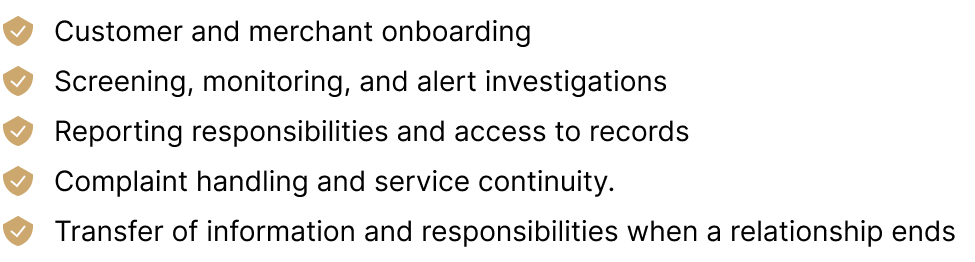
The operational arrangements should match the contract. Following a payment through each participating system can reveal missing information, inconsistent controls, or decisions that each party assumes another will make.
Businesses should also assess whether essential records remain accessible during an outage, provider failure, or termination.
Payment Processing Fees, Disclosures, and Cancellation Terms
Accurate pricing and clear merchant communications are important parts of payment processor compliance.
On November 2, 2026, the Federal Trade Commission (FTC) and Washington state announced a complaint and proposed settlement involving Riverside Payments. The authorities alleged misleading savings claims, inadequate disclosures about fees and renewals, and significant obstacles to cancellation.
The allegations illustrate why providers should review the entire merchant experience.
- Sales scripts,
- quotes,
- processing agreements,
- equipment leases,
- billing statements, and
- cancellation procedures
– should communicate consistent terms.
Recurring complaints about unexpected fees or unsuccessful cancellation attempts can identify differences between company policies and actual practices. Compliance personnel should assess those patterns alongside sales incentives and customer service procedures.
Customer Data Security and the FTC Safeguards Rule
Some fintech companies are covered by the FTC Safeguards Rule, depending on their activities and regulatory jurisdiction.

Relevant requirements for covered businesses include
- access controls,
- security testing, and
- service-provider oversight,
– subject to applicable provisions and exceptions.
Companies using outsourced technology should understand:
- where customer information resides,
- who can access it, and
- how security incidents will be escalated.
Vendor contracts should reflect the company’s actual technical capabilities and incident response arrangements.
Changes to a platform, application, or service provider can also justify reviewing the company’s security controls and allocation of responsibilities.
A Practical Fintech Compliance Review
Before launching a product or changing a payment arrangement, management should assess six questions:
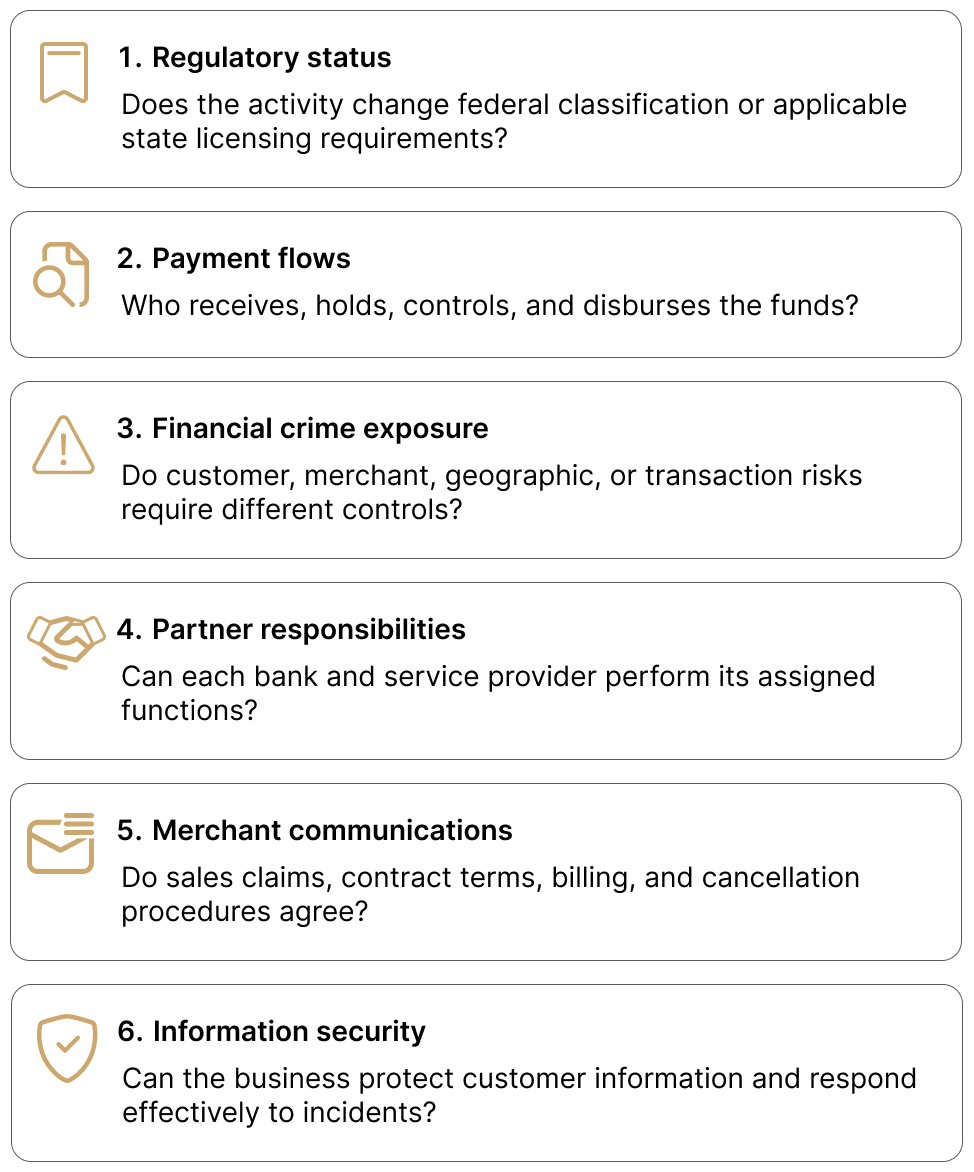
Documenting these decisions helps connect legal analysis with daily operations and future product changes.
Fintech Compliance Review Flowchart
The following flowchart illustrates how a fintech or payment processing company can organize its review. Federal classification, state licensing, and sanctions obligations require separate assessments before the findings are brought together into operational controls.
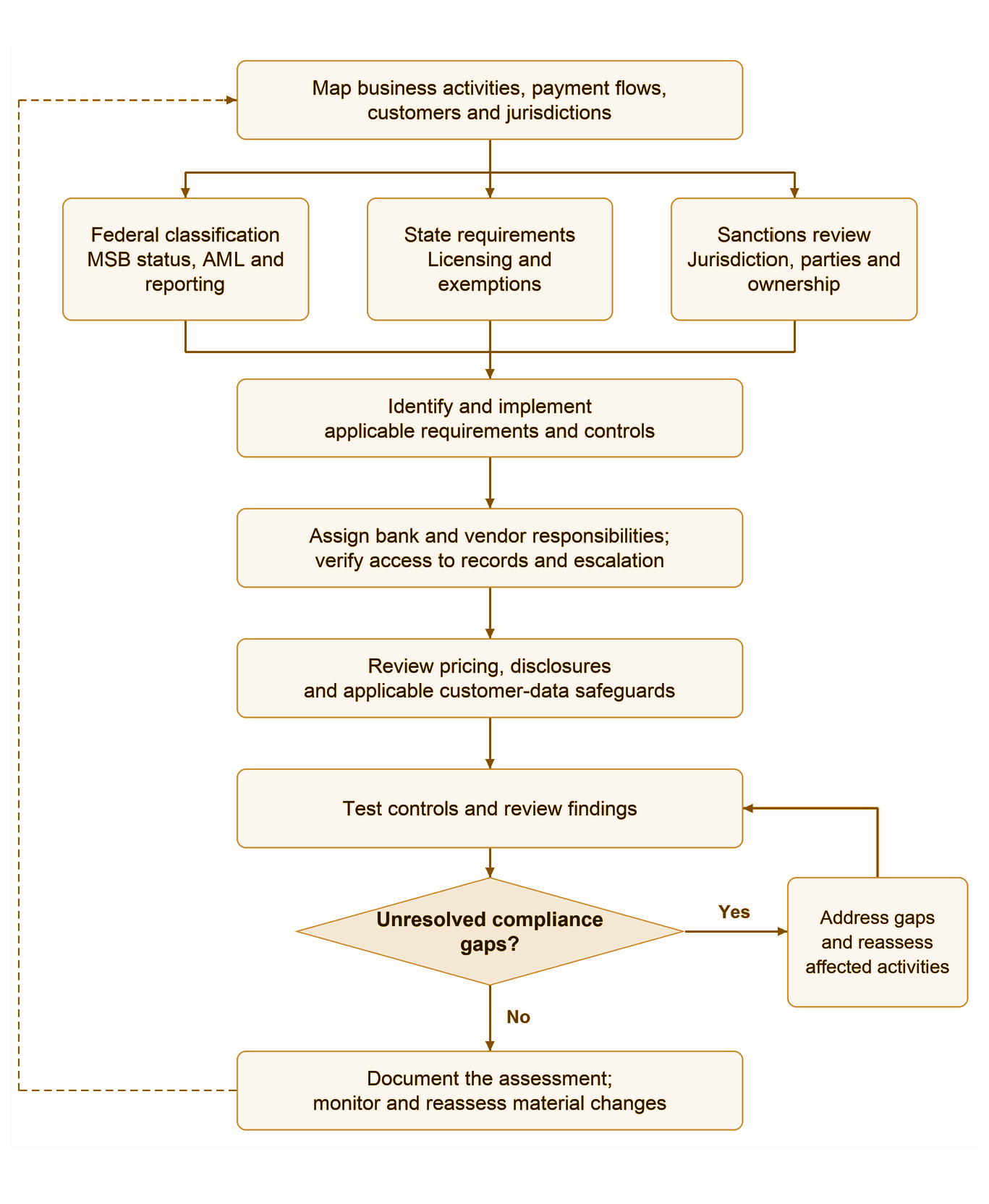
The review should reflect the company’s activities and applicable law. Completing the process does not constitute regulatory approval.
Frequently Asked Questions About Fintech and Payment Processing Compliance
Do all payment processors need a money transmitter license?
No. Federal classification and state licensing depend on the activities, payment flows, jurisdictions, and available exemptions. A business should assess both federal and applicable state requirements before relying on a payment processor exemption.
Does FinCEN registration replace state licensing?
No. FinCEN registration does not satisfy state or local licensing requirements. Registration and licensing are separate parts of the regulatory analysis.
Are all fintech companies required to maintain an AML program?
No. The applicable AML requirements depend on the company’s regulatory status and activities. Money services businesses are subject to the written AML program requirements in 31 C.F.R. § 1022.210.
Can a fintech rely on its bank’s sanctions screening?
A fintech may use banking partners and screening providers to perform compliance functions. It still needs to identify its own applicable obligations and ensure the arrangement provides appropriate information, investigation, escalation, and reporting capabilities.
Do OFAC sanctions apply to cryptocurrency payments?
OFAC obligations apply equally to digital currency and traditional currency transactions. Businesses subject to OFAC jurisdiction should assess the parties, ownership interests, locations, and activities involved, regardless of the payment technology.
When should a fintech update its compliance program?
Periodic reviews should be supplemented by reviews following material changes. New products, payment methods, merchant categories, markets, partners, and ownership structures can change obligations and risk exposure. Complaints, testing results, and identified failures can also justify reassessment.
Conclusion
Fintech and payment processing compliance requires coordinated attention to licensing, AML obligations, sanctions, banking relationships, merchant communications, and information security.
The most useful compliance program reflects how the company actually operates. Before changing a product, payment flow, or partnership, businesses should reassess applicable requirements, assign responsibility for each control, and verify that the necessary information and systems are available.
For fintech founders, executives, and in-house counsel, integrating legal review into business decisions can help identify compliance gaps before they become enforcement issues or disrupt important banking relationships.