
 ES
 RU
 TR
 FA
 AR
 ZH
Government Procurement Fraud
When can suspected federal procurement fraud raise a False Claims Act issue?
Look for a connection between the suspected conduct and a federal request for payment. Examples can include duplicate invoices or billing for goods that were never delivered. Identify the solicitation or contract, the payment request and the discrepancy that matters to payment. Bid or contract concerns can also be reported through the relevant agency channel.
DOJ guidance on the False Claims Act · DOJ guidance on reporting fraud against the federal government
What Is It?
Government procurement fraud involves deceptive practices during the acquisition of goods or services by public agencies, leading to inflated costs or substandard performance.
Organizations Involved
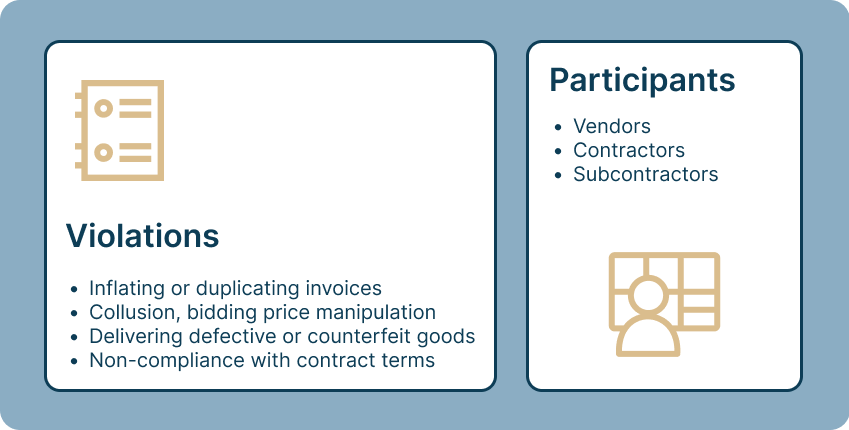
Vendors, contractors, and subcontractors bidding for government contracts are primary offenders. For example, a contractor may submit false bids or overcharge for services rendered.
Reportable Activities
Key violations include:
- Submitting inflated or duplicate invoices
- Collusion during bidding to manipulate prices
- Delivering defective or counterfeit goods
- Falsifying compliance with contract terms
Procurement records to review
Start with the solicitation, award, contract terms, invoices and records showing what the agency accepted or paid for. A bid irregularity and a false claim for government payment raise different issues. Friling Law can help assess whether the facts point to a knowingly false claim or a material false record under the False Claims Act, and discuss reporting options.
Read about programs and laws covering government fraud here

Please be advised that there are no obligations incurred until we have conducted a comprehensive review and reached a determination regarding the potential for proceeding with your matter.
Tell us about your case