
 ES
ES  RU
RU  TR
TR  FA
FA  AR
AR  ZH
ZH Blog
Blog description

OFAC and BIS Violations: Is the Reporting Person a Whistleblower, Witness, or Confidential Source? Legal Risks, Strategy, and FAQs
Companies engaged in international trade, banking, logistics, manufacturing, software, technology transfers, and cross-border finance face increasing scrutiny under U.S. sanctions and export-control laws.
Enforcement actions involving the U.S. Department of the Treasury, Office of Foreign Assets Control and the U.S. Department of Commerce, Bureau of Industry and Security continue to expand, particularly in areas involving Russia-related sanctions, dual-use goods, semiconductor controls, transshipment through third countries, concealed beneficial ownership, and restricted technology transfers.
As a result, law firms are increasingly contacted by individuals who claim to possess information about possible violations. Some identify themselves as “whistleblowers.” Others are employees, vendors, freight forwarders, counterparties, former executives, competitors, or witnesses with internal knowledge.
From a legal and strategic standpoint, the distinction matters.
Whether a person is properly characterized as a whistleblower, reporting source, confidential witness, complainant, or cooperating insider can materially affect:
- credibility with regulators;
- anti-retaliation protections;
- confidentiality strategy;
- civil and criminal exposure;
- internal investigation dynamics;
- leverage in settlement discussions;
- reputational risk management.
For companies and counsel, precision in terminology is not semantics, it is part of enforcement strategy.
Why OFAC and BIS Reporting Activity Is Increasing
Several trends have contributed to increased reporting activity:
1. Expanded Sanctions Enforcement
OFAC sanctions now reach complex global supply chains, payment systems, beneficial ownership structures, service providers, digital assets, and intermediaries.
2. Export Controls as National Security Priority
BIS enforcement increasingly targets:
- semiconductors;
- aerospace components;
- encryption technology;
- AI-related hardware;
- industrial equipment;
- oil and gas technology;
- military end-use items.
3. Internal Compliance Friction
Employees often discover red flags before management acts, including:
- screening overrides;
- suspicious third-country routing;
- false invoices;
- unusual payment requests;
- concealed ownership;
- altered product classifications;
- pressure to “move quickly” despite warnings.
4. Cross-Border Business Disputes
Distributors, agents, and counterparties sometimes report violations after disputes over commissions, blocked payments, terminated relationships, or unpaid invoices.
Is the Person Really a “Whistleblower”?
The word whistleblower is often used loosely. Legally, it may imply something more specific.
Typical whistleblower characteristics include:
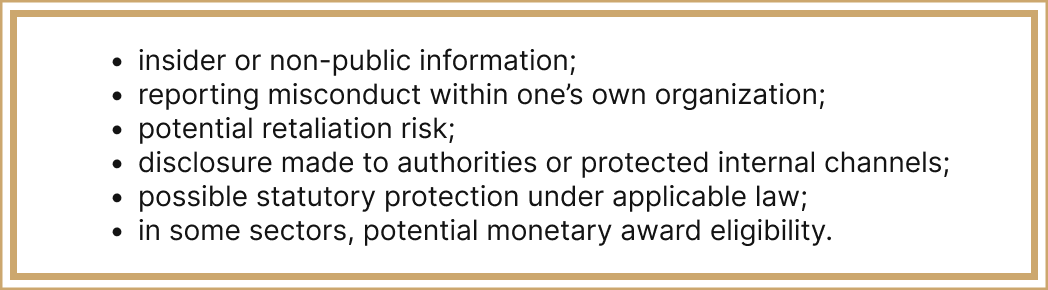
Not every person reporting an OFAC or BIS issue meets that definition.
Many are more accurately described as:
- confidential reporting source;
- witness;
- complainant;
- former employee source;
- vendor source;
- counterparty source;
- cooperating insider;
- concerned market participant.
Common Types of OFAC and BIS Reporting Sources
1. Current Employee
A compliance analyst, finance employee, sales manager, operations employee, logistics manager, or engineer reports concerns such as:
- shipments to restricted destinations;
- servicing sanctioned customers;
- manipulated screening results;
- knowingly false certifications;
- unauthorized exports.
This is closest to the classic whistleblower model.
2. Former Employee
Former employees often retain firsthand knowledge of historical conduct, internal culture, management directives, or recurring compliance failures.
3. Distributor / Agent / Reseller
Third parties may know about rerouting, end-user deception, shell intermediaries, and hidden destinations.
4. Bank or Payments Source
Individuals familiar with payment flows may identify suspicious wires, sanctioned-party exposure, nested relationships, or deceptive remittance data.
5. Competitor
Competitors sometimes report unlawful market advantages gained through prohibited exports or sanctions evasion.
6. Documentary Witness
A person in possession of authentic internal communications, contracts, invoices, or shipping records may become a key source regardless of job title.
Why Proper Classification Matters
1. Confidentiality and Identity Protection
Counsel may choose to present the person as a confidential source rather than “whistleblower” to reduce unnecessary visibility.
2. Credibility With Regulators
Authorities often evaluate:
- source proximity to facts;
- motive;
- corroborating evidence;
- consistency;
- timing;
- possible commercial bias.
3. Employment and Retaliation Issues
Employees may face discipline, termination, or pressure. Separate employment counsel may be appropriate.
4. Source Exposure
If the person participated in transactions, document approvals, payments, or exports, self-exposure analysis is essential.
What OFAC and BIS Usually Care About Most
Regardless of labels, agencies generally focus on facts and evidence.
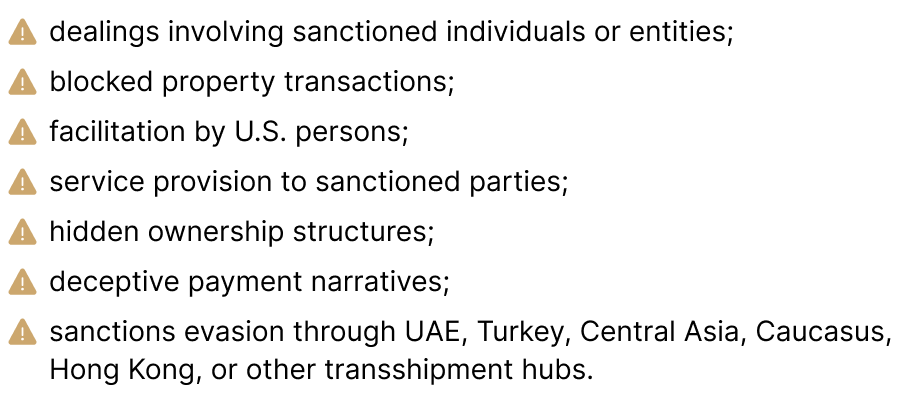
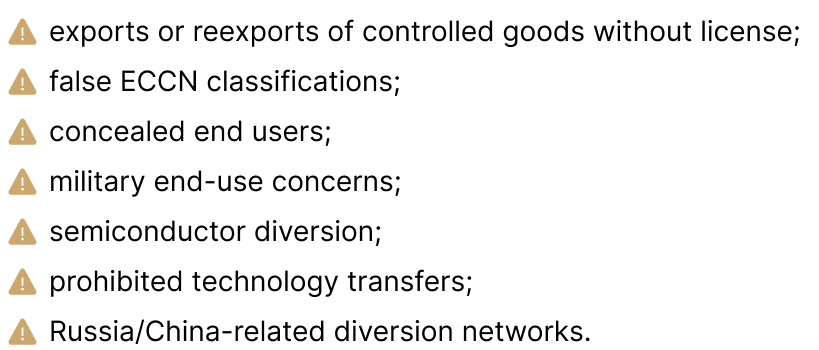
High-interest issues often include:
OFAC Red Flags
BIS Red Flags
Immediate Instructions Often Given to Reporting Sources
Experienced counsel often gives three immediate directives:
1. Do Not Request Documents Obtained Unlawfully
Do not access systems, emails, shared drives, cloud platforms, or devices outside authorized permissions.
2. Do Not Contact the Company Without Advice
Unplanned outreach can trigger:
- evidence destruction;
- retaliation;
- witness coaching;
- internal cover stories;
- loss of anonymity.
3. Preserve Anonymity
Use secure channels and avoid unnecessary disclosure of identity.
What “Unlawfully Obtained Documents” Usually Means
This usually concerns how the material was obtained, not whether it was labeled confidential.
Examples include:
Unauthorized Access
- using another person’s credentials;
- bypassing access restrictions;
- downloading systems data without authorization.
Theft / Misappropriation
- taking restricted files;
- copying proprietary data unlawfully.
Interception
- unlawful call recording;
- intercepting emails or chats;
- spyware or keyloggers.
Court Order Violations
- misuse of discovery subject to protective orders;
- sealed records disclosures.
Improper Payments
- paying insiders for internal records.
What Is Not Automatically Unlawful
Depending on jurisdiction:
- personal observations;
- information remembered firsthand;
- documents lawfully accessed in normal duties;
- public records;
- open-source intelligence.
However, attorney-client privileged material raises separate and serious issues.
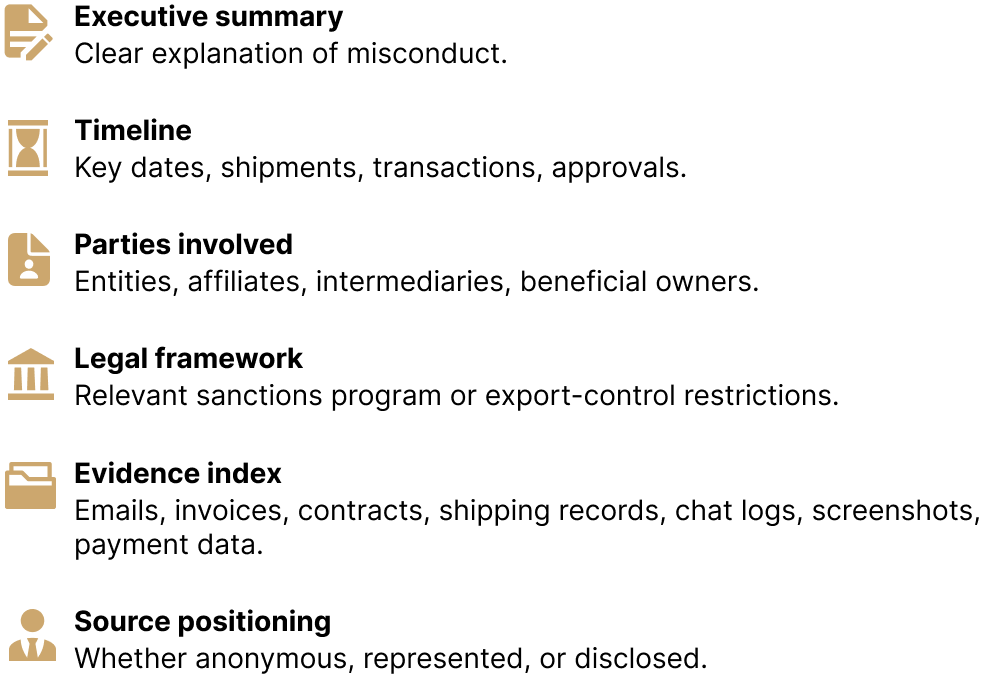
How a Law Firm May Build an OFAC or BIS Referral
A professionally prepared submission may include:
Frequent Mistakes Reporting Sources Make
- contacting management first;
- exaggerating claims;
- mixing facts with assumptions;
- forwarding privileged company legal emails;
- using work devices for outreach;
- accessing unauthorized files;
- waiting too long after learning facts.
Frequently Asked Questions (FAQ)
Is every OFAC or BIS reporter a whistleblower?
No. Many are witnesses, sources, complainants, or counterparties.
Can I stay anonymous?
Often yes through counsel, though anonymity cannot always be guaranteed if litigation or testimony becomes necessary.
Can non-U.S. persons report?
Yes. Nationality does not prevent submission of relevant information.
Does OFAC have a broad whistleblower reward program?
No broad standalone OFAC reward regime comparable to some other regulatory programs.
Does BIS have a whistleblower reward program?
Not generally in the same broad sense as certain securities programs.
What if I was involved?
Obtain legal advice immediately before any disclosure.
Should I gather more evidence first?
Only lawfully held evidence. Do not access unauthorized systems.
Can competitors report violations?
Yes, though motive and evidence quality may be scrutinized.
What agencies may become involved?
Depending on facts: OFAC, BIS, U.S. Department of Justice, Federal Bureau of Investigation, customs authorities, banking regulators, or others.
How quickly should action be taken?
Promptly. Transactions continue, records disappear, and positions harden.
Conclusion
Reporting potential violations involving U.S. Department of the Treasury, Office of Foreign Assets Control sanctions or U.S. Department of Commerce, Bureau of Industry and Security export controls is rarely as simple as sending a complaint. The legal posture of the reporting individual, whether a whistleblower, witness, employee source, counterparty, or confidential informant, can materially affect anonymity, credibility, retaliation risk, and strategic options.
For regulators, labels are secondary to evidence. What typically matters most is whether the information is specific, credible, timely, and supported by lawfully obtained documentation. For reporting individuals, however, labels and processes can matter significantly, particularly where employment exposure, contractual obligations, cross-border considerations, or potential personal liability may exist.
For companies, this article underscores an equally important lesson: robust internal reporting channels, prompt escalation procedures, meaningful compliance culture, and rapid remediation remain the best defense before concerns are taken outside the organization.
For potential sources, acting impulsively can create unnecessary risk. Unauthorized document collection, informal confrontation with management, or poorly framed submissions may damage both the source and the matter itself. A structured, legally informed approach is often the prudent path.
In short, OFAC and BIS matters should be handled with precision, discretion, and strategy. Whether the individual is ultimately characterized as a whistleblower or simply a confidential source, the quality of the facts, and the manner in which they are presented, often determines the outcome.