
 ES
ES  RU
RU  TR
TR  FA
FA  AR
AR  ZH
ZH Blog
Blog description
Semiconductor Export Controls in 2026: Dual-Use Risk, Re-export, Sanctions Exposure, and Compliance Strategy
Semiconductors are among the most strategically sensitive products in global trade. In 2026, exporting semiconductors is no longer a routine commercial matter: it is a legal, geopolitical, and compliance issue involving export controls, sanctions, end-user restrictions, re-export rules, customs scrutiny, and supply-chain enforcement risk.
A semiconductor sold for a legitimate civilian purpose may later be incorporated into military systems, artificial intelligence infrastructure, telecom surveillance platforms, drones, aerospace equipment, or sanctioned industrial programs. For that reason, governments increasingly regulate semiconductor trade through national security frameworks.
For manufacturers, distributors, resellers, logistics providers, private equity firms, and investors, the central issue is no longer simply whether a sale is profitable. It is whether the transaction is lawful, defensible, and properly controlled.
This article explains semiconductor export controls in 2026, with special focus on dual-use risk, resale responsibility, re-export, sanctions exposure, and practical compliance strategy.
Why Semiconductors Receive Heightened Regulatory Attention
Semiconductors power nearly every advanced industry:
- artificial intelligence
- cloud computing
- defense systems
- aerospace
- telecommunications
- automotive technology
- cybersecurity tools
- industrial automation
- quantum research
- consumer electronics
Because semiconductors support both civilian and military applications, many are treated as dual-use goods.
That means the same processor may be used in:
Civilian Applications
- laptops
- servers
- medical devices
- routers
- vehicles
- industrial machinery
Sensitive Applications
- military drones
- missile systems
- encrypted battlefield communications
- surveillance networks
- advanced radar
- supercomputing clusters
- autonomous weapons systems
This dual-use nature drives aggressive regulation worldwide.
Main U.S. Legal Framework for Semiconductor Exports
1. Export Administration Regulations (EAR)
The principal U.S. regime is administered by the U.S. Department of Commerce – Bureau of Industry and Security.
The EAR may regulate:
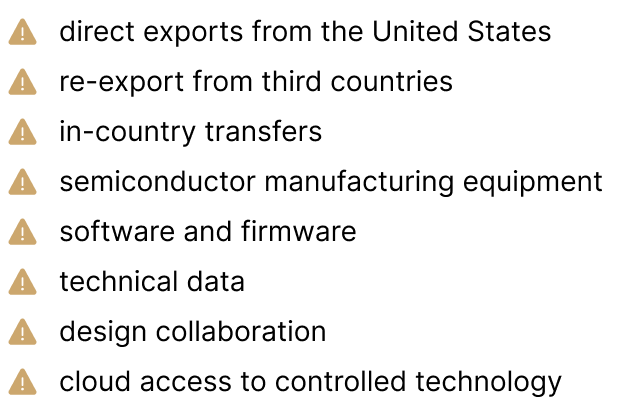
Many semiconductors require classification under the Commerce Control List (CCL) using an ECCN.
2. OFAC Sanctions
Office of Foreign Assets Control may prohibit or restrict transactions involving semiconductors where the deal touches:
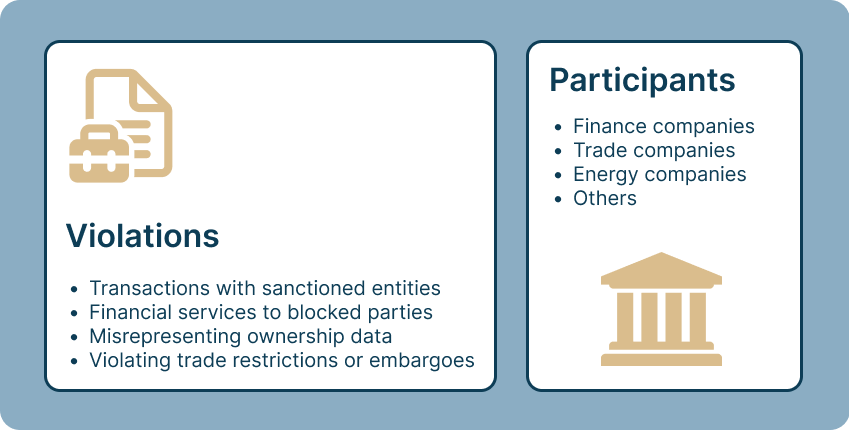
Even where BIS licensing might be possible, OFAC restrictions may independently block the transaction.
3. ITAR and Defense Electronics
If a semiconductor is specially designed for defense articles or military systems, it may fall under Directorate of Defense Trade Controls rather than EAR.
That often creates stricter licensing, registration, and enforcement consequences.
Dual-Use Risk in 2026: Not Only Advanced AI Processors
Many companies focus only on cutting-edge AI processors. That is too narrow.
Regulators may also scrutinize:
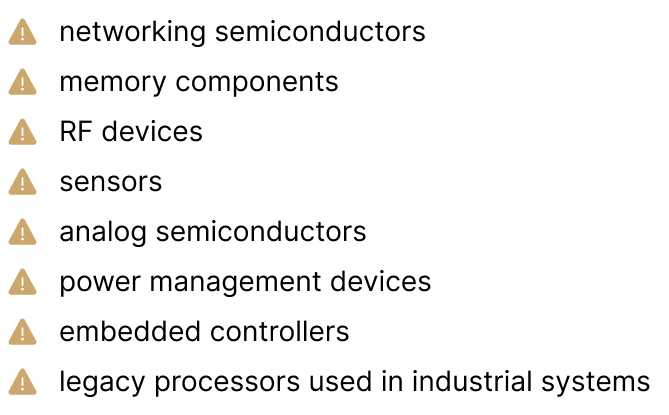
Even lower-end products may fall under restricted programs.
Why Legacy Semiconductors Matter
Older-generation semiconductors may still be valuable for:
- military repair programs
- sanctioned manufacturing replacement parts
- drone production
- industrial retrofits
- telecom interception systems
- import substitution strategies
In many cases, authorities care less about novelty and more about end use.
Re-export and Resale Liability
A Critical Mistake: “We Sold Abroad, So Responsibility Ended”
Many exporters incorrectly assume liability ends once semiconductors are sold to a foreign distributor.
That assumption can be dangerous.
Authorities often review whether the original supplier:
- knew the goods would be resold onward
- ignored diversion red flags
- failed to conduct due diligence
- used intermediaries to avoid scrutiny
- continued supply after suspicious activity
- accepted commercially irrational routing
Where those facts exist, enforcement risk may remain.
Example Scenario
A U.S. seller exports semiconductors to a distributor in the United Arab Emirates. The distributor later routes goods to users in Russia or a restricted buyer in China.
Authorities may ask:
- What diligence was performed?
- Were quantities commercially logical?
- Were warnings ignored?
- Was the end user deliberately avoided?
- Did the seller continue after concerns arose?
Common Red Flags in Semiconductor Trade
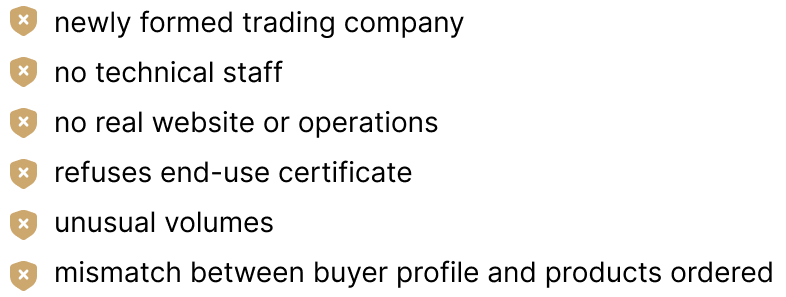
Customer Red Flags
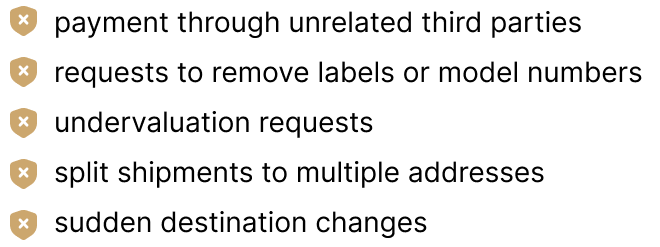
Transaction Red Flags
Logistics Red Flags
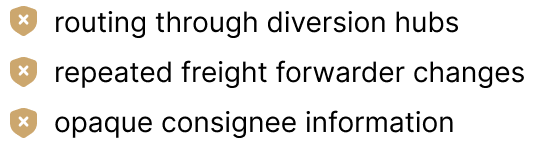
Ignoring repeated red flags creates substantial risk.
Can Foreign Companies Face U.S. Exposure?
Yes. Many non-U.S. companies assume U.S. export law does not affect them. That is often incorrect.
Exposure may arise through:
- U.S.-origin semiconductors
- U.S. software or technology
- Re-export of U.S.-controlled items
- U.S. persons involvement
- U.S. dollar clearing touchpoints
- Foreign Direct Product Rule issues
This can create real liability for overseas resellers and integrators.
Highest-Risk Destinations in 2026
Semiconductor transactions involving the following jurisdictions often receive enhanced scrutiny:
🇨🇳 China
🇷🇺 Russia
🇮🇷 Iran
🇰🇵 North Korea
🇧🇾 Belarus
Third-country diversion hubs may also present elevated risk.
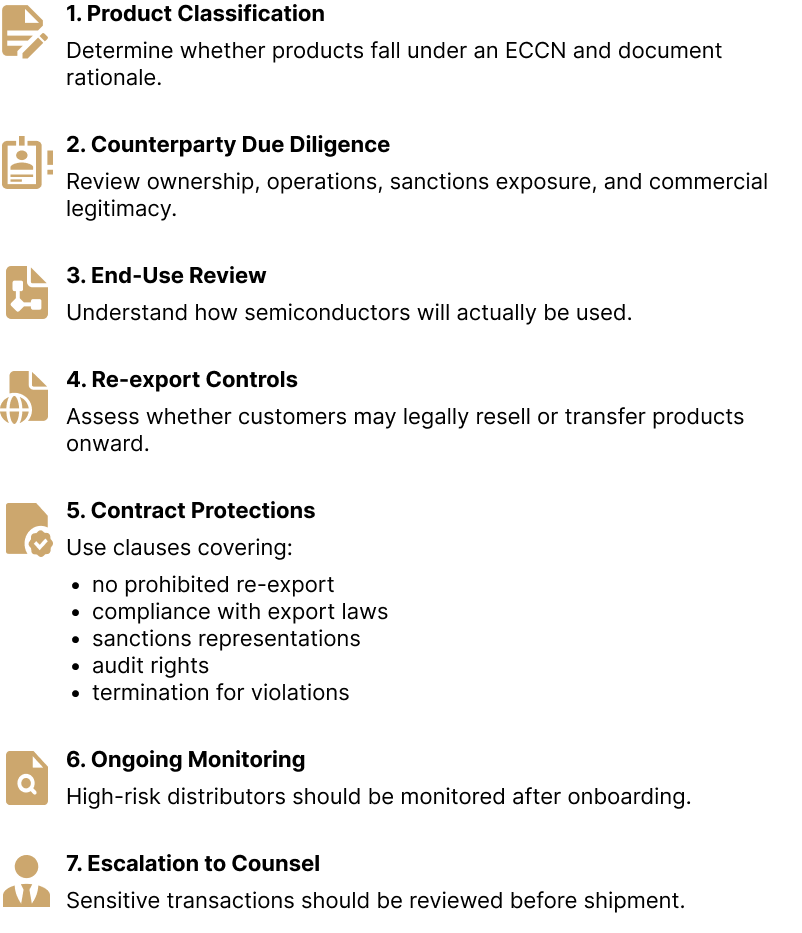
Best Compliance Strategy for Semiconductor Exporters
Penalties for Violations
Potential consequences include:
- substantial civil fines
- criminal prosecution
- denial of export privileges
- blocked funds
- seizure of goods
- customs delays
- reputational damage
- loss of banking relationships
- debarment from government contracts
For intentional evasion matters, consequences can be severe.
Why Businesses Hire an Export Lawyer
An experienced export attorney or compliance lawyer may assist with:
- ECCN classification disputes
- BIS license applications
- OFAC licensing strategy
- distributor investigations
- voluntary self-disclosures
- seizure response
- internal audits
- board risk reviews
- global supply-chain controls
FAQ
Are all semiconductors export controlled?
Not all equally, but many require review depending on destination, user, and end use.
Does resale by a foreign distributor matter?
Yes. Re-export and diversion risk can be highly relevant.
Are older semiconductors low risk?
Not necessarily. Legacy components may support restricted systems.
Can technical support be controlled?
Yes. Data, firmware, and know-how transfers may be regulated.
Should contracts address re-export activities?
Absolutely. Standard sales contracts are often insufficient.
Conclusion
In 2026, semiconductors are not viewed merely as commercial goods. They are strategic assets subject to overlapping export control, sanctions, and national security frameworks.
For many companies, the greatest risk is not the first shipment—it is the downstream resale, re-export, diversion, or undisclosed end use that follows.
Businesses involved in semiconductor trade should treat each transaction as a regulated strategic transfer requiring classification, diligence, contractual controls, monitoring, and legal review. Preventive compliance is typically far less expensive than an enforcement investigation later.