
 ES
ES  RU
RU  TR
TR  FA
FA  AR
AR  ZH
ZH Blog
Blog description
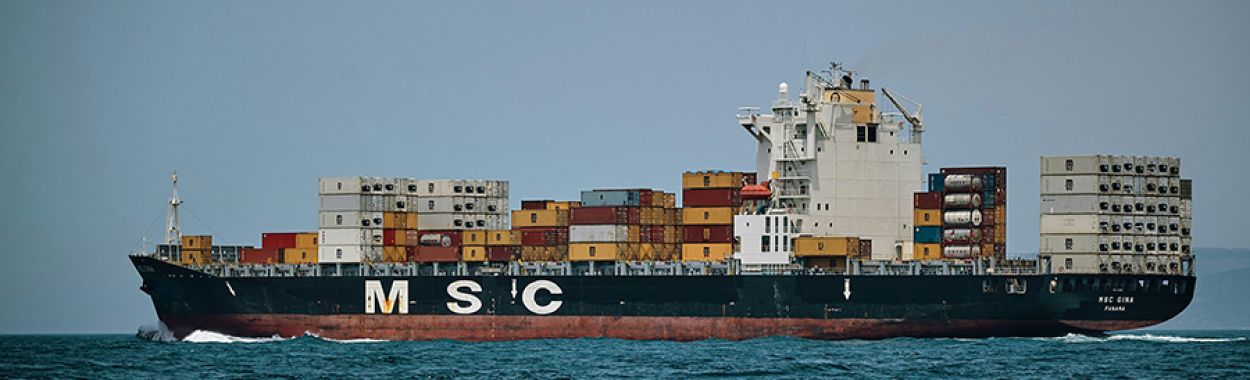
Weapons Re-export in 2026: ITAR, EAR, Sanctions Risk, and Third-Country Transfer Compliance
Weapons re-export has become one of the most aggressively scrutinized areas of global trade compliance. In 2026, regulators are no longer focused only on the original exporter. They are increasingly targeting distributors, resellers, freight intermediaries, affiliates, and foreign companies that move defense-related goods from one country to another.
Many companies assume that once a weapon, component, drone system, optic, or military-use item leaves the original exporting country, future transfers are someone else’s responsibility. That assumption is often wrong.
A re-export event can trigger licensing obligations, sanctions liability, end-user violations, anti-diversion exposure, and severe civil or criminal penalties.
This article explains how weapon re-export works in 2026, where companies make mistakes, and how to reduce legal risk.
What Is Re-Export?
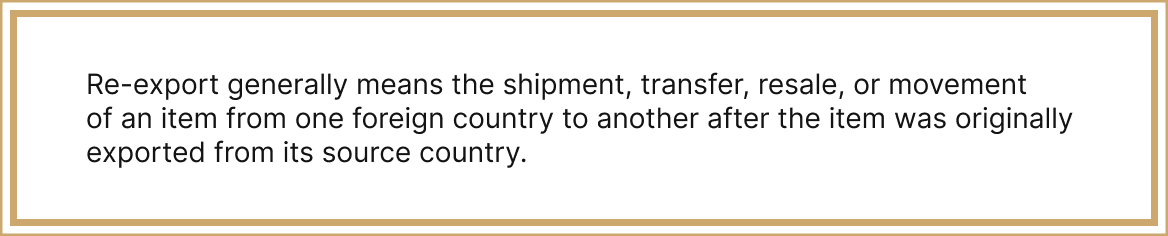
Example:
- A drone component of the U.S.-origin is exported to the United Arab Emirates and later sold to a buyer in Turkey.
- Night vision equipment exported to Germany is then transferred to a distributor in Kazakhstan.
- Tactical sensors sold to Poland later appear in a sanctioned jurisdiction.
That second movement may itself require legal authorization.
Why Re-export Matters More in 2026
Governments now view re-export as a common path for:
- Sanction evasion
- Supply-chain concealment
- Procurement through intermediaries
- Battlefield diversion
- Parallel market resale
- Technology leakage
- Unauthorized military end users
- Components reaching embargoed states
As a result, re-export is a major enforcement priority.
U.S. Rules Affecting Weapons Re-export
1. ITAR Re-export
The International Traffic in Arms Regulations (ITAR) controls many defense items listed in the U.S. Munitions List.
If an ITAR-controlled item is exported abroad, later retransfer or re-export often requires authorization from the Directorate of Defense Trade Controls.
This can apply to:
- Firearms parts
- Weapon accessories
- Military electronics
- Aircraft components
- Defense software
- Technical data
- Defense services
A foreign company holding the item may still need U.S. approval before onward transfer.
2. EAR Re-export
The Export Administration Regulations (EAR) also regulate re-export of many dual-use goods.
Examples:
- Advanced semiconductors
- Sensors
- Navigation systems
- Commercial drones with military capability
- Encryption hardware
- Aerospace electronics
Foreign companies often underestimate that U.S.-origin content can remain controlled after first export.
3. OFAC Sanction Re-export
The Office of Foreign Assets Control may prohibit re-export involving:
- Russia
- Iran
- North Korea
- Syria
- Blocked persons
- Military procurement fronts
- SDN-owned companies
Even indirect transfers through third countries can create exposure.
Common Re-export Scenarios Creating Liability
Re-export liability often arises not from intentional misconduct, but from routine commercial activity that companies fail to classify as a regulated onward transfer. In 2026, regulators expect exporters, manufacturers, and foreign intermediaries to monitor downstream movement of controlled goods, components, software, and technical data.
Below are some of the most common scenarios that create legal exposure.
1. Distributor Resale Outside Approved Territory
A manufacturer appoints a local distributor to sell defense-related goods within an approved country or region. The distributor later resells the items to customers in other jurisdictions without required authorization.
Examples include:
- Tactical optics sold only for domestic resale but shipped onward abroad
- Drone components moved to neighboring states
- Firearm accessories sold through parallel market channels
- Military electronics routed through unauthorized resellers
This creates risk where contracts restrict territory, licenses limit destination, or end users were never screened.
Key Liability Issues
- Unauthorized re-export
- Sanctions screening failures
- Breach of license conditions
- False end-use representations
- Lack of distributor oversight
2. Affiliate Transfer Within the Same Corporate Group
Many multinational companies assume transfers between affiliated entities are low-risk because ownership is common. That assumption is often incorrect.
One subsidiary may send controlled parts, software, blueprints, or prototypes to another affiliate in a different country without reviewing export rules.
Examples:
- A European subsidiary ships U.S.-origin sensors to an Asian affiliate
- A regional office transfers military software keys internally
- Parent company inventory is reallocated to a higher-risk jurisdiction
Corporate ownership does not eliminate export restrictions.
Key Liability Issues
- Unauthorized intra-group re-export
- Deemed export / technical data release
- Missing licenses
- Internal compliance breakdown
- Inaccurate customs declarations
3. Repair, Warranty, or Return Movement
Items lawfully exported for maintenance, calibration, or warranty service may create risk when they are transferred onward after arrival.
Examples:
- Defense electronics sent for repair in one country, then forwarded elsewhere
- Returned equipment redirected to a new customer
- Refurbished optics resold internationally
- Servicing vendor uses subcontractors in another jurisdiction
Companies often focus on the original shipment and ignore what happens after service intake.
Key Liability Issues
- Unauthorized re-transfer after repair
- Loss of chain-of-custody records
- Use of unscreened subcontractors
- Technical data exposure during servicing
- Destination change without approval
4. Integrator / OEM Risk
A controlled component may be embedded into a larger commercial or defense platform and then exported globally.
Examples:
- Guidance electronics installed into unmanned systems
- Controlled chips integrated into avionics packages
- Sensors incorporated into maritime platforms
- Optics mounted into surveillance systems for resale abroad
The final product may look different, but embedded controlled content can still matter.
Key Liability Issues
- Misclassification of finished product
- Failure to disclose controlled content
- Unlicensed re-export of incorporated parts
- End-use/end-user restrictions ignored
- Incomplete supply-chain visibility
5. Customer Diversion / Front Buyer Scenario
The original purchaser appears legitimate but is acting for another buyer, sanctioned entity, military end user, or state procurement network.
Examples:
- Small trading company buying unusually high volumes
- Customer refuses to identify final consignee
- Goods routed through multiple transit hubs
- Payment comes from unrelated third party
- Buyer requests removal of labels or serial numbers
This is one of the highest-risk re-export patterns in modern enforcement actions.
Key Liability Issues
- Sanction evasion
- False statements
- Export control circumvention
- Conspiracy allegations
- Seizure and criminal exposure
6. Freight Forwarder Route Change
A shipment approved for one destination is rerouted mid-transit through another jurisdiction or delivered to a substituted consignee.
Examples:
- Forwarder changes destination due to “logistics issues”
- Cargo held in free trade zone then reassigned
- New consignee appears after shipment departs
Key Liability Issues
- Unauthorized destination change
- Missing updated screening
- Customs and shipping record inconsistencies
7. Software / Firmware Re-export
No physical goods move, but controlled software, updates, activation keys, or encrypted firmware are transferred internationally.
Examples:
- Remote download access granted abroad
- Firmware updates sent to restricted jurisdiction
- Foreign engineer receives controlled source code
Key Liability Issues
- Intangible export violations
- Technical data release
- Access-control failures
Practical Lesson
Most re-export violations do not begin with obvious criminal intent. They begin with assumptions:
- “It’s only an internal transfer.”
- “It’s already overseas.”
- “The distributor handles compliance.”
- “It’s just a repair return.”
- “No physical shipment occurred.”
Those assumptions can become enforcement cases.
Best Risk Controls
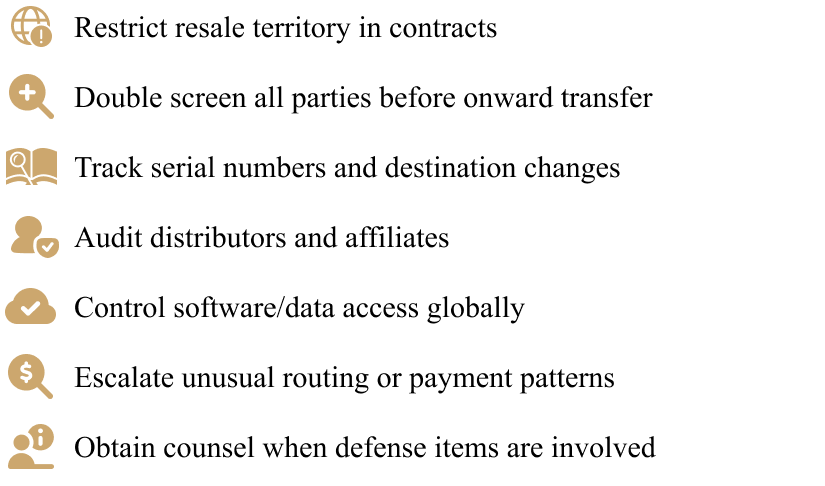
Red Flag Countries in Re-export Chains
Third-country hubs often receive increased scrutiny when linked to onward transfers. Risk depends on facts, but regulators frequently examine flows through:
- 🇦🇪 United Arab Emirates
- 🇹🇷 Turkey
- 🇰🇿 Kazakhstan
- 🇦🇲 Armenia
- 🇬🇪 Georgia
- 🇰🇬 Kyrgyzstan
- 🇷🇸 Serbia
Being a transit jurisdiction does not imply wrongdoing but it can require enhanced diligence.
Penalties for Illegal Re-export
Potential consequences include:
- Civil fines
- Criminal charges
- Export privilege denial
- Government blacklisting
- Seizure of goods
- Banking disruption
- Contract termination
- Personal liability for managers and owners
Best Compliance Practices for Weapons Re-export in 2026
Effective re-export compliance requires more than checking a sanctions list once at onboarding. Regulators increasingly expect companies to maintain continuous downstream controls over where defense-related goods, components, software, and technical data ultimately go. The strongest programs combine contractual protections, screening, transaction monitoring, distributor oversight, and escalation procedures.
1. Contractual Controls
Well-drafted agreements are the first line of defense. Distribution, reseller, OEM, logistics, and customer contracts should clearly restrict unauthorized onward transfers.
Key provisions often include:
- No resale, re-export, re-transfer, or diversion without prior written approval
- Compliance with applicable ITAR, EAR, sanctions, customs, and local laws
- Named approved territories only
- Prohibition on sales to embargoed countries or restricted parties
- End-use limitations (civilian use only, no military integration, no drone weaponization, etc.)
- Requirement to maintain records and provide supporting documentation
- Immediate notice of any government inquiry or suspected diversion
- Right to suspend shipments for compliance review
- Audit rights and inspection rights
- Indemnification for unauthorized transfers
A weak contract often becomes a major liability after diversion occurs.
2. Screen Every Transfer
Initial onboarding is not enough. A customer that was acceptable six months ago may later become sanctioned, acquired by a blocked entity, or linked to a prohibited military network.
Best practices include:
- Double screening every shipment, not only new customers
- Screening buyers, consignees, freight forwarders, banks, brokers, owners, and end users
- Screening beneficial ownership where possible
- Reviewing vessel, aircraft, and shipping data when relevant
- Monitoring updated sanctions lists and watchlists
Relevant lists may include those maintained by the Office of Foreign Assets Control, Bureau of Industry and Security, and allied jurisdictions.
3. Trace Ultimate Destination
The invoice destination may not be the real destination. Sophisticated diversion schemes often use transit hubs, shell distributors, or layered shipping routes.
Companies should seek to understand:
- Final country of use
- Final customer or operating entity
- Whether goods are being integrated into another product
- Whether goods are intended for government, defense, or security use
- Whether the stated destination matches commercial logic
If the route appears unnecessarily complex, further diligence is warranted.
4. Monitor Unusual Demand Patterns
Transactional anomalies often reveal diversion risk before documentary evidence does.
Examples of red flags:
- Sudden large orders inconsistent with customer history
- Demand for spare parts without installed base explanation
- Repeated requests for expedited shipment
- Orders for high-risk models only
- Frequent routing changes after purchase
- Payment from unrelated third parties
- Requests to omit product descriptions from documents
- Purchases inconsistent with local market size
Compliance teams should use data analytics, ERP review, and sales feedback to identify abnormal behavior.
5. Control Technical Data
Re-export controls often apply not only to hardware, but also to intangible transfers.
This may include:
- CAD (Computer-Aided Design) files
- Engineering drawings
- Firmware
- Source code
- Specifications
- Repair manuals
- Secure system architecture
- Encryption modules
- Training or defense services
Controls should include:
- Access restrictions by nationality and role
- Secure cloud permissions
- Download logging
- Need-to-know segmentation
- Vendor access controls
- Approval workflow for cross-border sharing
An email attachment can create the same regulatory issue as a shipment.
6. Audit Distributors and Resellers
Many companies over-rely on distributor certifications. Regulators increasingly expect active oversight.
Recommended controls:
- Risk-based due diligence before appointment
- Ownership and reputation checks
- Territory and market capability review
- Annual compliance certifications
- Review of resale customers and channels
- Shipment reconciliation
- Sample invoice review
- Site visits where justified
- Training on export and sanctions obligations
- Termination rights for non-cooperation
If a distributor cannot explain where products go, risk is elevated.
7. Escalate Suspicious Requests Immediately
Commercial pressure often causes preventable violations. Sales teams may want to close deals quickly, but unresolved red flags should trigger a hold.
Examples requiring escalation:
- Hidden end user
- Refusal to disclose destination
- Military or government rumors inconsistent with stated use
- Request to split shipments artificially
- Request to relabel goods
- Request to route through multiple intermediaries
- Last-minute country changes
- Payment from sanctioned-risk jurisdictions
- “No paperwork needed” requests
The safest rule: if facts do not make commercial sense, pause shipment.
8. Keep Strong Records
In many investigations, the issue becomes not only what happened—but what the company can prove.
Maintain:
- Screening logs
- End-user certificates
- Contracts and amendments
- Shipping records
- Internal approvals
- Due diligence notes
- Email correspondence
- Technical classifications
- License determinations
- Escalation decisions
Good records can materially reduce enforcement exposure.
9. Train Front-Line Staff
Sales, logistics, engineering, and finance often see problems first.
Training should cover:
- Diversion red flags
- Restricted parties screening
- Third-country routing risk
- Technical data controls
- Escalation channels
- No-retaliation reporting culture
A compliance team alone cannot monitor every transaction.
10. Use Legal Review for High-Risk Deals
Transactions involving defense items, sensitive countries, government buyers, or opaque ownership structures often require counsel review.
External counsel can assist with:
- ITAR/EAR classification
- Re-export licensing analysis
- OFAC sanctions risk
- Distributor structuring
- Internal investigations
- Voluntary self-disclosures
- Government inquiries
Frequently Asked Questions
If I sold goods legally once, am I done?
No. Many goods remain controlled after the first export.
Can a foreign distributor violate U.S. law?
Yes. Re-export of U.S.-origin items can create exposure.
What if only components are U.S.-made, not the entire product?
That may still matter depending on classification, content level, and jurisdiction.
Can re-export rules apply to software?
Yes. Software, firmware, source code, and technical data can be covered.
Is not knowing a defense?
Usually not if clear red flags were ignored.
Why Legal Counsel Is Often Necessary
Weapon re-export matters often involve overlapping issues:
- ITAR licensing
- EAR classification
- Sanctions screening
- Supply-chain tracing
- Distributor controls
- Voluntary self-disclosure
- Internal investigations
- Government subpoenas
A routine resale can become a multi-agency enforcement issue quickly.
Conclusion
In 2026, weapon re-export is not a secondary transaction, it is a frontline compliance event.
The original export is only the beginning. Regulators increasingly ask what happened next: who received the goods, where they went next, who financed them, and whether the transfer should be licensed.
Companies that control downstream movement reduce risk. Companies that ignore re-export often discover liability after investigators have already found out about the route.