
 ES
ES  RU
RU  TR
TR  FA
FA  AR
AR  ZH
ZH Securities and Exchange Commission (SEC):
The SEC enforces laws against securities fraud, including insider trading and accounting violations, ensuring transparency and fairness in financial markets.
Securities and Exchange Commission (SEC) has specific criteria for a whistleblower case to qualify under its programs:
- Original Information: The information provided must be new and not already known to the SEC.
- Violation of Securities Laws: The reported misconduct must involve breaches of federal securities laws, such as insider trading, market manipulation, or misrepresentation of financial data.
- Significant Impact: The information must lead to a successful enforcement action resulting in sanctions exceeding $1 million.
Commodity Futures Trading Commission (CFTC):
The CFTC oversees commodity and derivatives markets, tackling fraud such as price manipulation and insider trading in commodities and futures.
For a whistleblower case to qualify under the Commodity Futures Trading Commission (CFTC) whistleblower program, it must meet these criteria:
- Original Information: The information provided must be new and not already known to the CFTC.
- Violation of Commodity Laws: The misconduct must involve breaches of the Commodity Exchange Act, such as market manipulation, fraud, or false reporting.
- Enforcement Success: The tip must contribute to a successful enforcement action with sanctions exceeding $1 million.
Internal Revenue Service (IRS):
The IRS investigates tax fraud and evasion, holding individuals and businesses accountable for underreporting income or falsifying deductions.
To qualify under the IRS Whistleblower Program, a case must meet these criteria:
- Tax Law Violation: The reported conduct must involve significant tax noncompliance, such as underreporting income, fraudulent deductions, or offshore tax evasion.
- Monetary Threshold: The total unpaid taxes, penalties, and interest must exceed $2 million.
- Substantial Contribution: The whistleblower’s information must directly aid the IRS in identifying or recovering unpaid taxes.
Dodd-Frank Act:
This act enhances protections for whistleblowers in financial fraud cases, offering rewards and confidentiality for reporting violations in securities and commodities markets.
To qualify under the Dodd-Frank Act as a whistleblower, the following criteria must be met:
- Original Information: The whistleblower must provide new, non-public information about violations of federal securities or commodities laws.
- Significant Misconduct: The reported violation must involve substantial wrongdoing, such as insider trading, market manipulation, or fraud.
- Voluntary Submission: The information must be given willingly, without any legal obligation to report.
- Impactful Information: The tip must lead to a successful enforcement action with penalties exceeding $1 million.
Reporting Securities & Commodities Fraud
Reporting such fraud under financial whistleblower programs helps maintain integrity in financial markets and protects investors. To report securities fraud, the SEC Whistleblower Program is your best route. Financial whistleblowers can file reports of fraudulent activities and may receive monetary rewards if their information leads to a successful enforcement action. For optimal results, it is advised to seek the assistance of a whistleblower attorney who specializes in securities law to guide you through the process and protect your rights. Support of a whistleblower law firm can also ensure your anonymity and help maximize any potential reward.

Please be advised that there are no obligations incurred until we have conducted a comprehensive review and reached a determination regarding the potential for proceeding with your matter.
Submit your case anonymously
What Is It?
Mortgage fraud involves intentional misrepresentation or omission of information during the mortgage process to obtain funds or secure favorable loan terms unlawfully.
Organizations Involved
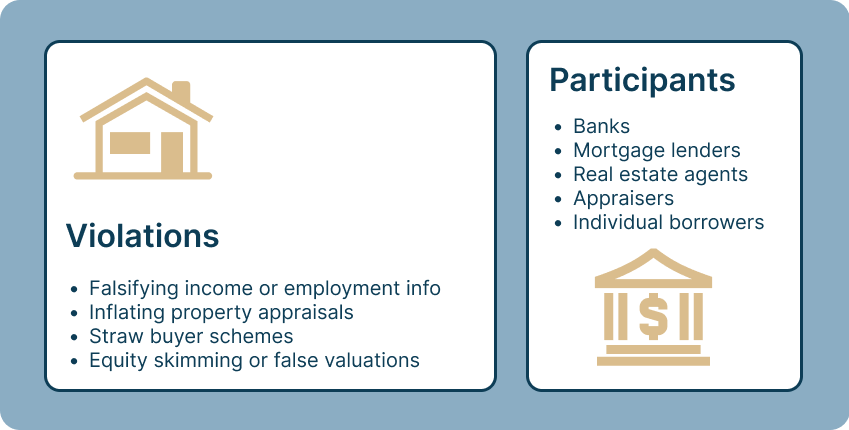
Banks, mortgage lenders, real estate agents, appraisers, and even individual borrowers may commit mortgage fraud. For instance, a lender might falsify documents to qualify an unqualified buyer, or borrowers might misstate income to secure a loan.
Reportable Activities
Key violations include:
- Falsifying income or employment information
- Inflating property appraisals
- Straw buyer schemes
- Equity skimming or property flipping with false valuations
Reporting such fraud under financial whistleblower programs helps maintain integrity in financial markets and protects investors. To report mortgage fraud, False Claims Act and Dodd-Frank Act are your best route. Financial whistleblowers can file reports of fraudulent activities and may receive monetary rewards if their information leads to a successful enforcement action. For optimal results, it is advised to seek the assistance of a whistleblower attorney who specializes in financial laws to guide you through the process and protect your rights. Support of a whistleblower law firm can also ensure your anonymity and help maximize any potential reward.
Read about Government programs and laws governing financial fraud here
Please be advised that there are no obligations incurred until we have conducted a comprehensive review and reached a determination regarding the potential for proceeding with your matter.
Submit your case anonymously
What Is It?
IRS tax evasion involves deliberate attempts to avoid paying owed taxes, often through illegal means such as underreporting income or inflating deductions.
Organizations Involved
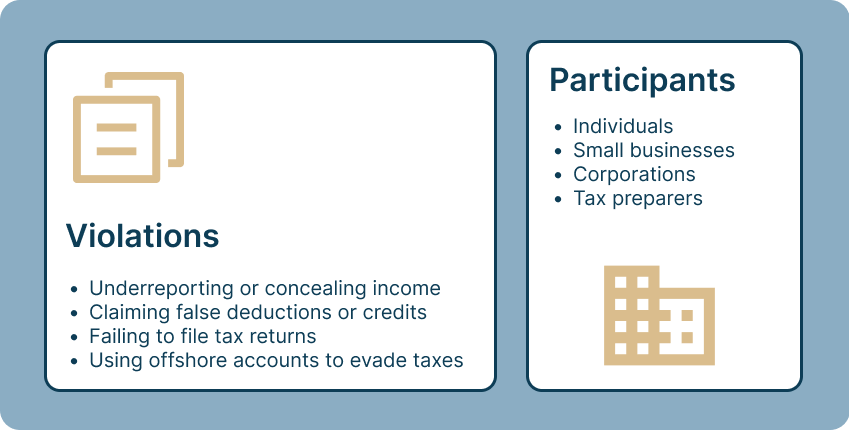
Individuals, small businesses, corporations, and even tax preparers can engage in tax evasion. Examples include companies hiding income in offshore accounts or individuals falsifying deductions to reduce their tax liabilities.
Reportable Activities
Key violations include:
- Underreporting or concealing income
- Claiming false deductions or credits
- Failing to file tax returns
- Using offshore accounts to evade taxes
Reporting such fraud under financial whistleblower programs helps maintain integrity in financial markets and protects investors. To report tax fraud, the IRS Whistleblower Program is your best route. Financial whistleblowers can file reports of fraudulent activities and may receive monetary rewards if their information leads to a successful enforcement action. For optimal results, it is advised to seek the assistance of a whistleblower attorney who specializes in tax law to guide you through the process and protect your rights. Support of a whistleblower law firm can also ensure your anonymity and help maximize any potential reward.
Read about Government programs and laws governing financial fraud here
Please be advised that there are no obligations incurred until we have conducted a comprehensive review and reached a determination regarding the potential for proceeding with your matter.
Submit your case anonymously
What Is It?
Financial Fraud involves illegal activities aimed at financial gain, such as securities fraud, insider trading, and mortgage fraud. These violations are often committed by individuals, financial institutions, or corporations seeking to manipulate or deceive financial systems for profit. Financial fraud can cause significant harm to investors, the economy, and the public.
Securities and commodities fraud involves illegal activities related to the manipulation of financial markets, aimed at deceiving investors or regulators for personal gain.
Organizations Involved
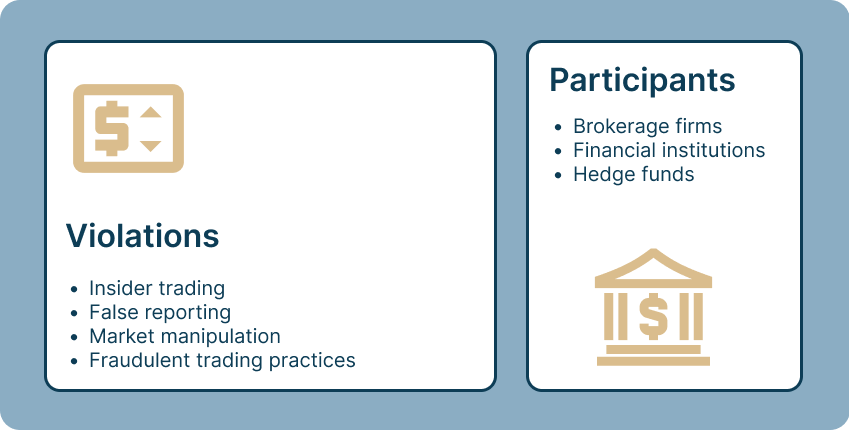
Entities such as brokerage firms, financial institutions, and hedge funds may be involved in securities and commodities fraud. Examples include insider trading by executives or market manipulation by large firms.
Reportable Activities
Key violations include:
- Insider trading (trading based on non-public information)
- False reporting or misleading financial statements
- Market manipulation or "pump and dump" schemes
- Fraudulent trading practices
Reporting such fraud under financial whistleblower programs helps maintain integrity in financial markets and protects investors. To report securities fraud, the SEC Whistleblower Program is your best route. Financial whistleblowers can file reports of fraudulent activities and may receive monetary rewards if their information leads to a successful enforcement action. For optimal results, it is advised to seek the assistance of a whistleblower attorney who specializes in securities law to guide you through the process and protect your rights. Support of a whistleblower law firm can also ensure your anonymity and help maximize any potential reward.
Read about Government programs and laws governing financial fraud here
Please be advised that there are no obligations incurred until we have conducted a comprehensive review and reached a determination regarding the potential for proceeding with your matter.
Submit your case anonymously