
 ES
 RU
 TR
 FA
 AR
 ZH
Where can I report suspected consumer fraud, and how do I assess retaliation protections?
The FTC accepts reports about scams and deceptive business practices. If you also face a workplace consequence for reporting, identify what you reported, to whom, and what happened afterward. Any employment protection depends on the law that covers your conduct and the reporting circumstances. OSHA lists several statutes it administers by subject.
FTC guidance on reporting fraud · OSHA retaliation protections by subject
Government programs like the Federal Trade Commission Act, the Telemarketing Sales Rule (TSR), and consumer financial protection laws work to safeguard consumers from deceptive practices. The FTC enforces rules against unfair or deceptive acts, the TSR regulates telemarketing fraud, and consumer financial protection laws prevent abusive practices in lending and financial services. These programs ensure transparency, fairness, and accountability in business transactions, providing consumers with necessary protections from fraud and unethical behavior.
To qualify under the Federal Trade Commission Act for whistleblower claims, the following criteria must typically be met:
- Unfair or Deceptive Practices: The fraudulent activity must involve unfair or deceptive acts or practices affecting interstate commerce.
- Intent: The perpetrator must intentionally engage in deceptive or misleading practices.
- Consumer Harm: The act must have caused or have the potential to cause harm to consumers.
To qualify under the Telemarketing Sales Rule (TSR), a whistleblower must identify violations of regulations that protect consumers from deceptive or abusive telemarketing practices. Criteria include:
- Misleading or Deceptive Practices: The telemarketer must have used false or misleading statements to promote goods or services.
- Failure to Disclose Information: Important details (such as total cost, terms, or refund policies) were not disclosed.
- Unlawful Practices: Such as calling numbers on the National Do Not Call Registry or misrepresenting the offer.
Reporting FTC Fraud
To report FTC fraud effectively under special whistleblower programs, it's essential to document the fraudulent activity thoroughly and file a complaint with the FTC. However, for complex cases or those involving significant financial harm, turning for help to a whistleblower lawyer can ensure proper guidance. A whistleblower law firm specializing in consumer protection can assist in navigating the legal process, understanding your whistleblower rights, and enhancing the chances of holding wrongdoers accountable. Their expertise can help protect your interests and improve the overall outcome of the case.

Please be advised that there are no obligations incurred until we have conducted a comprehensive review and reached a determination regarding the potential for proceeding with your matter.
Tell us about your case
How can suspected deceptive business practices be reported to the FTC?
An FTC fraud report can describe the specific representation or practice, who used it, where it appeared and how consumers were affected. Relevant information might include the dates, advertisements, terms or communications that show what consumers were told. The FTC provides an online reporting portal for suspected fraud and deceptive practices.
FTC guidance on reporting fraud
What Is It?
FTC (Federal Trade Commission) fraud and violations refer to deceptive, unfair, or fraudulent practices targeting consumers and businesses, or undermine fair competition. The Federal Trade Commission (FTC) enforces rules to protect consumers and the market from such activities. Violations often involve false advertising, misleading business practices, or fraud in financial transactions. Reporting FTC fraud helps protect consumers and maintain ethical business practices.
Organizations Involved
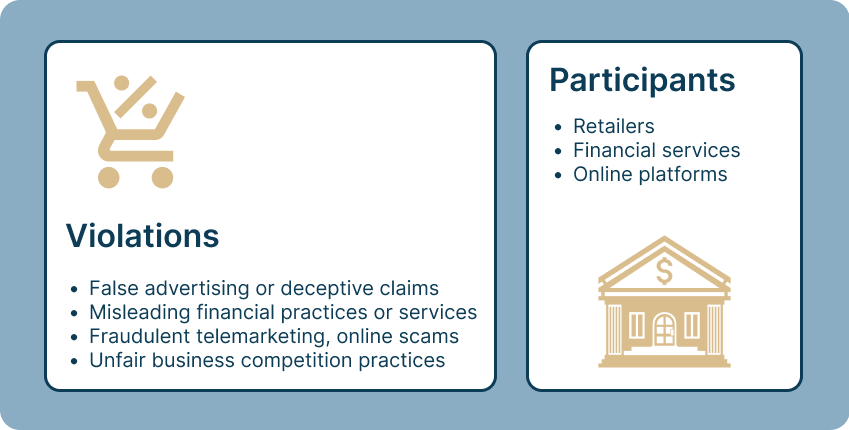
Common perpetrators include retailers, financial services companies, and online platforms. Examples include misleading advertising, false claims about products, and deceptive sales tactics.
Reportable Activities
Key violations include:
- False advertising or deceptive claims
- Misleading financial practices or services
- Fraudulent telemarketing or online scams
- Unfair business competition practices
To report FTC fraud effectively under special whistleblower programs, it's essential to document the fraudulent activity thoroughly and file a complaint with the FTC. However, for complex cases or those involving significant financial harm, turning for help to a whistleblower lawyer can ensure proper guidance. A whistleblower law firm specializing in consumer protection can assist in navigating the legal process, understanding your whistleblower rights, and enhancing the chances of holding wrongdoers accountable. Their expertise can help protect your interests and improve the overall outcome of the case.
Read about Government programs and laws governing FTC fraud here
Please be advised that there are no obligations incurred until we have conducted a comprehensive review and reached a determination regarding the potential for proceeding with your matter.
Tell us about your case